
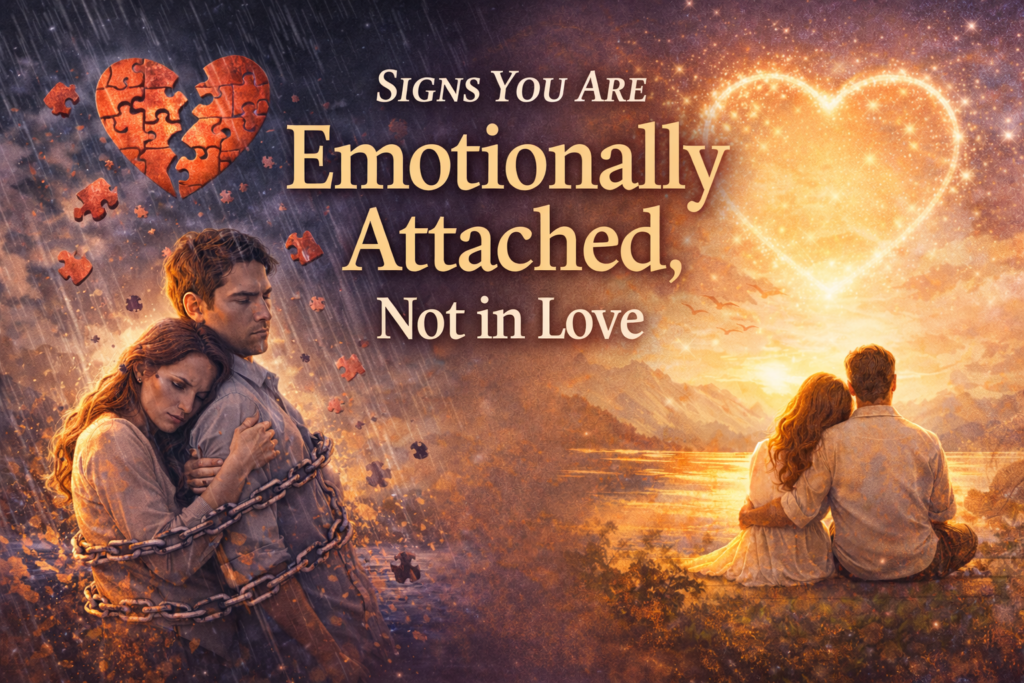
Are you emotionally attached not in love? Many people confuse emotional dependency with genuine connection. Although attachment can feel intense and passionate, it is very different from conscious love. Recognizing whether you are emotionally attached not in love can help you avoid unhealthy patterns and build stronger relationships.
In this article, we’ll explore the key signs of emotional attachment and explain how it differs from real love.
What Does Emotionally Attached Not in Love Really Mean?
Being emotionally attached not in love means your happiness depends heavily on another person. In other words, you may feel incomplete, anxious, or insecure without them.
While attachment often feels powerful, it is usually driven by fear rather than freedom. True love, by contrast, is based on awareness, stability, and mutual respect.
If you haven’t yet explored the deeper meaning of love, you may find our article on What Is True Love? A Spiritual Perspective helpful for understanding the foundation of conscious relationships.
1️⃣ One Sign You Are Emotionally Attached Not in Love: Constant Fear of Losing Them
The first clear sign is ongoing anxiety about losing the person. For example, you may overthink their messages or panic when they don’t respond quickly.
When you are emotionally attached not in love, even small misunderstandings feel threatening. However, genuine love creates emotional safety rather than constant fear.
Healthy relationships allow trust to grow gradually instead of forcing reassurance every day.
2️⃣ Your Mood Depends Entirely on Their Behavior
Another strong indicator is emotional instability tied to their actions. When they are affectionate, you feel secure. On the other hand, when they seem distant, your mood collapses.
This emotional rollercoaster often signals dependency. In contrast, real love allows emotional balance even during difficult moments.
3️⃣ Feeling Incomplete: A Common Emotionally Attached Not in Love Pattern
If you believe you cannot function without the relationship, you may be emotionally attached not in love.
Attachment says, “You complete me.”
Love says, “I choose to share my life with you.”
When you feel whole within yourself, relationships become partnerships rather than emotional lifelines.
Research on attachment styles explained by Psychology Today shows that early insecurity patterns often shape emotional dependency in adulthood.
4️⃣ You Ignore Red Flags to Avoid Being Alone
Many people stay in unhealthy situations because loneliness feels unbearable. As a result, they tolerate behavior that conflicts with their values.
If you overlook repeated disrespect or manipulation, attachment may be influencing your decisions. By contrast, conscious love includes self-respect and healthy boundaries.
5️⃣ You Try to Control the Relationship
Control often arises from fear. You may try to manage their friendships, schedule, or communication habits.
However, control does not strengthen connection. Instead, it usually creates tension and resistance.
As we explained in our article on Ego in Relationships: How It Destroys Love and How to Fix It, insecurity and ego often drive controlling behavior.
6️⃣ You Fear Being Alone More Than Losing the Person
This is one of the clearest signs of being emotionally attached not in love.
Sometimes, the real fear is not losing them specifically, but facing solitude. Consequently, you cling to the relationship for emotional comfort rather than genuine connection.
Developing self-awareness — for example through meditation — can help you become comfortable with independence and emotional stability.
Studies published by the National Institutes of Health suggest that self-compassion improves emotional regulation and relationship satisfaction.
7️⃣ Conflicts Feel Threatening When You Are Emotionally Attached Not in Love
In attached relationships, disagreements feel like disasters. You may believe every argument signals the end.
Conversely, healthy love allows space for discussion and growth. Conflict becomes constructive rather than catastrophic.
When fear reduces, communication improves naturally.
The Core Difference: Fear vs Freedom
Ultimately, the difference is simple.
Attachment is driven by fear.
Love is guided by freedom.
Attachment clings and controls.
Love trusts and supports.
If your relationship feels more anxious than peaceful, it may be time to reflect on whether you are emotionally attached, not in love.
How to Move from Attachment to Real Love
First, build self-awareness.
Second, strengthen your sense of identity outside the relationship.
Finally, practice emotional independence.
Over time, fear decreases, and connection becomes healthier.
True love grows when both individuals feel secure on their own.
While attachment often feels powerful, it is usually driven by fear rather than freedom. True love, by contrast, is based on awareness, stability, and mutual respect.
If you haven’t yet explored the deeper meaning of love, you may find our article on What Is True Love? A Spiritual Perspective helpful for understanding the foundation of conscious relationships.
1️⃣ One Sign You Are Emotionally Attached, Not in Love: Constant Fear of Losing Them
The first clear sign is ongoing anxiety about losing the person. For example, you may overthink their messages or panic when they don’t respond quickly.
When you are emotionally attached, not in love, even small misunderstandings feel threatening. However, genuine love creates emotional safety rather than constant fear.
Healthy relationships allow trust to grow gradually instead of forcing reassurance every day.
2️⃣ Your Mood Depends Entirely on Their Behavior
Another strong indicator is emotional instability tied to their actions. When they are affectionate, you feel secure. On the other hand, when they seem distant, your mood collapses.
This emotional rollercoaster often signals dependency. In contrast, real love allows emotional balance even during difficult moments.
3️⃣ Feeling Incomplete: A Common Emotionally Attached Not in Love Pattern
If you believe you cannot function without the relationship, you may be emotionally attached, not in love.
Attachment says, “You complete me.”
Love says, “I choose to share my life with you.”
When you feel whole within yourself, relationships become partnerships rather than emotional lifelines.
Mental health experts at Verywell Mind explain how anxious attachment patterns can create emotional dependency in relationships.
4️⃣ You Ignore Red Flags to Avoid Being Alone
Many people stay in unhealthy situations because loneliness feels unbearable. As a result, they tolerate behavior that conflicts with their values.
If you overlook repeated disrespect or manipulation, attachment may be influencing your decisions. By contrast, conscious love includes self-respect and healthy boundaries.
5️⃣ You Try to Control the Relationship
Control often arises from fear. You may try to manage their friendships, schedule, or communication habits.
However, control does not strengthen the connection. Instead, it usually creates tension and resistance.
As we explained in our article on Ego in Relationships: How It Destroys Love and How to Fix It, insecurity and ego often drive controlling behavior.

6️⃣ You Fear Being Alone More Than Losing the Person
This is one of the clearest signs of being emotionally attached not in love.
Sometimes, the real fear is not losing them specifically, but facing solitude. Consequently, you cling to the relationship for emotional comfort rather than genuine connection.
Developing self-awareness — for example through meditation — can help you become comfortable with independence and emotional stability.
Studies published by the National Institutes of Health suggest that self-compassion improves emotional regulation and relationship satisfaction.
7️⃣ Conflicts Feel Threatening When You Are Emotionally Attached, Not in Love
In attached relationships, disagreements feel like disasters. You may believe every argument signals the end.
Conversely, healthy love allows space for discussion and growth. Conflict becomes constructive rather than catastrophic.
When fear reduces, communication improves naturally.
The Core Difference: Fear vs Freedom
Ultimately, the difference is simple.
Attachment is driven by fear.
Love is guided by freedom.
Attachment clings and controls.
Love trusts and supports.
If your relationship feels more anxious than peaceful, it may be time to reflect on whether you are emotionally attached, not in love.
How to Move from Attachment to Real Love
First, build self-awareness.
Second, strengthen your sense of identity outside the relationship.
Finally, practice emotional independence.
Over time, fear decreases, and connection becomes healthier.
True love grows when both individuals feel secure in their own.
Frequently Asked Questions
Not necessarily. Some level of attachment is natural in close relationships. However, extreme dependency creates imbalance and anxiety.
Start by developing self-awareness. Practice emotional independence, strengthen self-worth, and communicate openly. Over time, fear reduces and stability increases.
Yes, but the key is balance. Healthy relationships include connection without losing individuality.
Attachment activates fear of loss, which creates emotional highs and lows. Love, in contrast, feels calmer and more secure.
Yes. Meditation increases awareness and reduces reactive thinking. As a result, you respond more consciously rather than acting from insecurity.

Pingback: What Is Detachment? Does It Mean Not Caring?
Pingback: Osho on Love: Why Love Must Be Freedom, Not Possession - Your Privacy Matters
Pingback: Why We Chase People Who Don’t Love Us Back