
Introduction
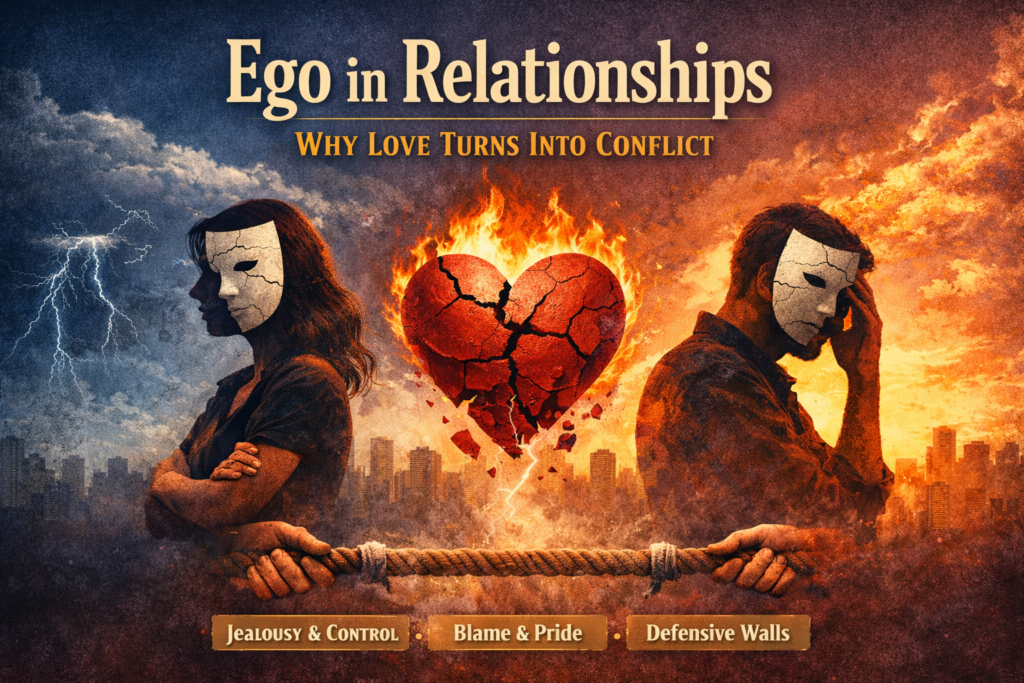
Ego in relationships is one of the most common causes of conflict, emotional distance, and misunderstanding. Although love brings two people together, identity attachment often pushes them apart.
Many couples believe their problems are about communication. However, in many cases, the real issue is defensiveness, pride, and the need to be right. Understanding how identity operates in romantic connections can transform the way you relate to your partner.

What Does Ego in Relationships Mean?
In relationships, ego refers to the attachment to self-image.
It shows up when:
- You need to win arguments
- You struggle to admit mistakes
- You feel offended easily
- You fear losing control
- You compare your partner to others
Instead of listening openly, identity becomes protective. As a result, conversations turn into battles rather than understanding.
Why Ego Creates Conflict in Love
Love requires vulnerability. However, self-image fears vulnerability.
For example, if you believe you must always appear strong, admitting hurt feels threatening. Consequently, instead of expressing pain, you may respond with anger or withdrawal.
Similarly, jealousy often stems from insecurity within identity. When someone fears losing importance, possessiveness increases.
Therefore, many conflicts are not about the situation itself. They are about protecting personal identity.
According to research from the American Psychological Association (APA), defensiveness and identity protection are common causes of conflict in close relationships.
Signs Ego Is Damaging Your Relationship
You may notice identity-based conflict if:
- Apologies feel like defeat
- You interrupt instead of listening
- You keep a score of past mistakes
- You struggle to forgive
- You prioritize being right over being connected
Although these behaviors feel justified in the moment, they slowly create emotional distance.
Ego vs Love: Understanding the Difference
Identity-based love seeks control.
Healthy love allows freedom.
When attachment dominates, phrases like “You belong to me” appear. In contrast, mature love says, “I walk beside you.”
This difference determines whether a relationship grows or becomes suffocating.
If you’ve explored the difference between attachment and love, you’ll notice similar patterns here.
How Ego Shows Up During Arguments
Arguments often activate identity defense mechanisms.
Instead of hearing your partner’s perspective, you may focus on protecting your own. As a result, both individuals feel unheard.
Moreover, unresolved insecurity amplifies minor disagreements. A simple comment can feel like a personal attack when self-worth feels fragile.
Awareness interrupts this cycle.
How Awareness Reduces Ego in Relationships
The first step is noticing your reaction before responding.
When you feel triggered, pause and ask:
“What part of me feels threatened right now?”
This question shifts attention inward rather than outward.
Additionally, practicing conscious communication strengthens emotional safety.
Over time, identity softens because connection becomes more important than control.
Letting Go of the Need to Be Right
Many relationship struggles come from the need to win.
However, winning an argument often means losing emotional closeness.
Instead of asking, “How do I prove my point?” ask, “How do we understand each other?”
This small shift reduces defensiveness and builds trust.
Can a Relationship Survive a Strong Ego?
Yes, but only if both partners are willing to become aware of their patterns.
Self-reflection reduces blame. When you take responsibility for your reactions, communication improves naturally.
If overthinking frequently intensifies your conflicts, addressing that pattern may also help.
Growth in love requires flexibility.
Practical Exercise for Couples
Next time conflict arises:
- Pause for 10 seconds.
- Breathe slowly.
- Identify what belief feels challenged.
- Express emotion instead of accusation.
For example:
Instead of saying, “You never listen,” try, “I feel unheard right now.”
This approach reduces defensiveness.
Conclusion
Ego in relationships does not mean someone is selfish or arrogant. Instead, it reflects attachment to identity.
When identity feels threatened, connection suffers. However, awareness creates space between reaction and response.
Love grows when control decreases.
Ultimately, healthy relationships are not built on winning. They are built on understanding.

Pingback: What Is True Love? A Spiritual Perspective
Pingback: Why We Chase People Who Don’t Love Us Back