
Introduction
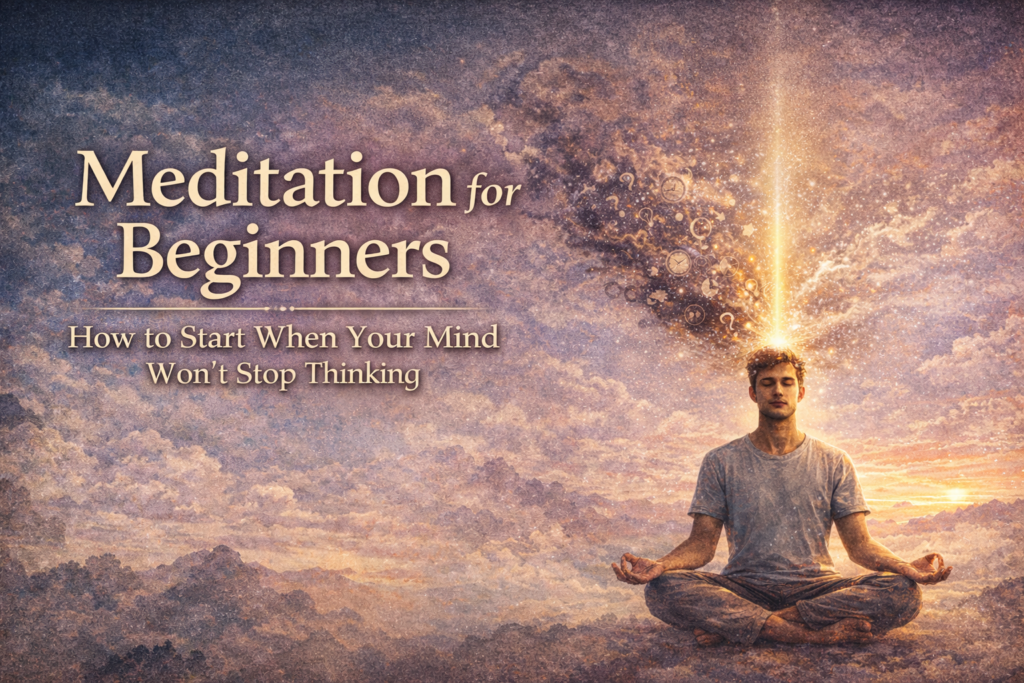
Meditation for beginners often feels frustrating. Many people try to sit quietly, only to discover that their thoughts become louder than ever. As a result, they assume they are “bad at meditation.”
However, meditation is not about stopping thoughts. Instead, it is about learning how to observe them without becoming overwhelmed. Therefore, this guide explains how to begin a meditation practice in a simple and realistic way.
If you struggle with overthinking, this article will help you understand why meditation feels difficult at first — and how to continue anyway.
What Is Meditation?
Meditation is the practice of paying attention intentionally.
It does not require special beliefs or complicated rituals. Rather, it involves observing your breath, sensations, or thoughts without judgment.
Although many traditions teach meditation differently, the core principle remains the same: awareness.
In simple terms, meditation trains the mind to become less reactive.
Why Meditation Feels Hard for Beginners
When beginners sit quietly, they suddenly notice how active their mind is.
Thoughts about the past appear. Worries about the future arise. Random memories surface.
This does not mean you are failing. On the contrary, it means you are becoming aware of mental activity that was always there.
As explained in our article on overthinking, the mind naturally generates continuous thought loops. Meditation simply reveals this pattern.
Therefore, difficulty is part of the process.
Meditation for Beginners: The Simplest Way to Start
If you are new to meditation, keep it extremely simple.
- Sit comfortably.
- Close your eyes gently.
- Focus on your breathing.
- When thoughts appear, notice them and return to the breath.
That’s it.
You do not need to empty your mind. You only need to notice when attention drifts.
Each return to the breath strengthens awareness.
How Long Should You Meditate?
Beginners often ask how long meditation should last.
Start with:
5 minutes per day.
Consistency matters more than duration. Although longer sessions may feel impressive, short daily practice builds habit more effectively.
Over time, you can increase to 10 or 15 minutes naturally.
What to Do When Thoughts Won’t Stop
Instead of fighting thoughts, observe them.
For example, when a worry appears, silently label it:
“Planning.”
“Remembering.”
“Judging.”
Labeling creates distance. Consequently, emotional intensity decreases.
According to research on mindfulness-based stress reduction, observing thoughts reduces reactivity over time.
Thus, the goal is awareness — not silence.
Common Mistakes Beginners Make
Many beginners believe:
- Meditation should feel peaceful immediately
- A wandering mind means failure
- They must sit perfectly still
- They need special music or incense
However, these beliefs create unnecessary pressure.
Meditation is a skill. Like any skill, it improves with practice.
How Meditation Reduces Emotional Reactivity
Regular meditation changes how you respond to situations.
Instead of reacting instantly, you pause.
This pause weakens automatic defensive patterns. As discussed in our Ego & Identity section, identity attachment often fuels emotional reactions.
Meditation strengthens the gap between stimulus and response.
In that gap, choice appears.
Types of Meditation for Beginners
If breath focus feels difficult, try:
- Body scan meditation
- Guided meditation
- Walking meditation
- Loving-kindness meditation
Experiment gently. Over time, you will discover what feels natural.
Building a Daily Meditation Habit
To build consistency:
- Choose the same time each day
- Start small
- Avoid perfectionism
- Track progress simply
For example, meditate immediately after waking up or before sleep.
Habits grow through repetition, not intensity.
When Meditation Feels Emotional
Sometimes meditation brings unexpected emotions.
This is normal. When the mind becomes quieter, suppressed feelings may surface.
Instead of resisting, allow them gently.
If emotions feel overwhelming, consider speaking with a mental health professional. Meditation supports well-being but does not replace therapy.
Conclusion
Meditation for beginners does not require perfection. It requires consistency.
Although the mind may feel restless at first, awareness strengthens gradually. Each moment of noticing builds stability.
Instead of trying to stop thoughts, learn to observe them.
Over time, meditation becomes less about effort and more about presence
Frequently Asked Questions
Yes. Meditation does not require special ability. It requires patience.
Many people notice subtle benefits within a few weeks of consistent practice.
Yes. Thinking is natural. Meditation trains awareness of thinking.
Breath awareness is the simplest starting point.

Pingback: What Happens in the Brain During Meditation?